



















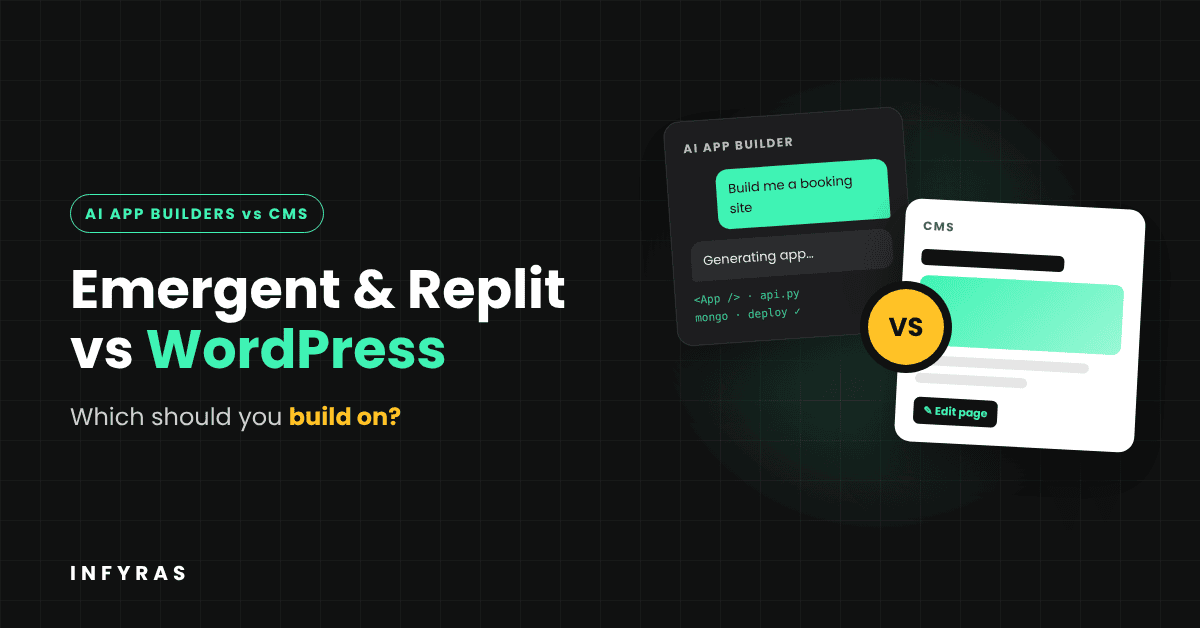
Emergent & Replit vs CMS web development: Which to Build On?
“I built my booking app in a weekend with AI. Why would I pay an agency for a website?” We hear this more every month.... Continue reading
Pratyksh Sharma
December 29, 2025

Many businesses proudly track website traffic. Visitors are coming in, pages are being viewed, and numbers look healthy on the surface. Yet inquiries remain low, forms stay empty, and sales don’t increase.
This is one of the most common — and dangerous — website problems.
A website that attracts visitors but fails to convert them is not underperforming.
It’s quietly wasting opportunity.
Traffic without conversions is not growth.
It’s leakage.
Visitors alone don’t pay bills. Action does.
A successful website is designed to guide users toward:
Contact forms
Calls or bookings
Purchases
Sign-ups
Enquiries
If users browse and leave without taking action, the website is failing its core purpose.
Most conversion issues don’t show up as obvious errors.
Common hidden problems include:
Confusing page structure
Weak or unclear call-to-actions
Poor mobile experience
Slow-loading pages
Forms that technically work but feel unreliable
Users don’t report these issues.
They simply leave.
Contact forms are often the most fragile part of a website.
Typical form-related issues include:
Forms not submitting consistently
Emails landing in spam
Missing validation messages
Broken integrations
Poor mobile usability
When a form fails even occasionally, trust is lost — and the lead is gone forever.
Visitors don’t arrive ready to contact you.
They need guidance.
Low-conversion websites often suffer from:
No clear next step
Too many distractions
Information overload
Missing trust signals
Poor page flow
A strong website leads users step-by-step instead of forcing them to figure things out.
Even a one-second delay can reduce conversions significantly.
Slow websites cause:
Higher bounce rates
Abandoned forms
Lower engagement
Reduced trust
Performance optimization isn’t just technical — it’s a conversion strategy.
Most traffic today comes from mobile devices, but many websites are still optimized only visually — not functionally.
Common mobile conversion problems include:
Hard-to-tap buttons
Forms that are difficult to fill
Layout shifts
Slow mobile load times
If your mobile users can’t convert easily, you’re losing the majority of your audience.
Conversion problems are rarely solved by guesswork.
Analytics help identify:
Where users drop off
Which pages fail to convert
How users interact with forms
Device-based performance issues
Data reveals friction that design alone cannot.
Even well-performing websites need continuous refinement.
Conversion-focused maintenance includes:
Form testing
UX improvements
Performance tuning
Funnel optimization
Regular analytics reviews
Small improvements compound into significant growth over time.
Conversion optimization is often delayed because:
Traffic numbers look “good enough”
Issues aren’t visible
Focus stays on design instead of behavior
No monitoring or testing process exists
But ignoring conversion problems means leaving revenue on the table every single day.
Websites that generate consistent leads are not accidental.
They are:
Structured for clarity
Optimized for speed
Designed around user behavior
Tested regularly
Maintained professionally
Conversion-focused websites turn visitors into customers — predictably.
A website that looks good and gets traffic can still fail as a business tool. Conversions don’t happen by chance — they happen by design, testing, and ongoing optimization.
The best-performing websites don’t chase traffic.
They maximize the value of every visitor.
Contact today for professional website conversion optimization and performance improvement.
Tell us about your idea and we'll get back within 24 hours.

Hi, I’m Pratyksh Sharma, the CEO and Founder of Infyras. Don’t hesitate to reach out to me anytime – I’m here to answer all your questions!
Business Solution
12 November, 2026
“I built my booking app in a weekend with AI. Why would I pay an agency for a website?” We hear this more every month.... Continue reading
Business Solution
22 October, 2026
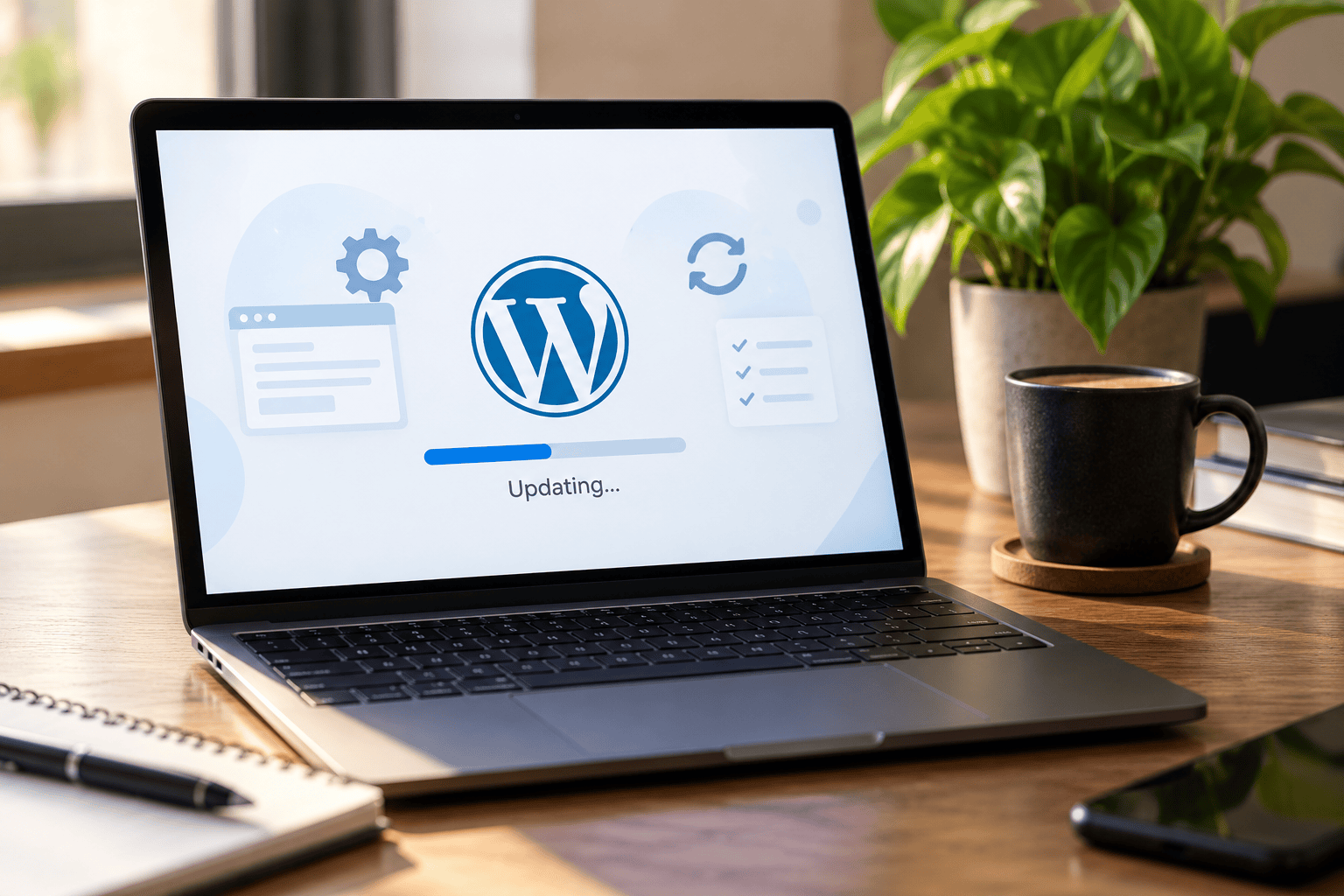
Most WordPress owners know the routine. A banner appears in the dashboard. Plugins need updating. You click the button, the banner disappears, and you feel... Continue reading

Business Solution
01 October, 2026
“We just need a currency switcher and a translation plugin.” That’s how most multi-currency, multi-language WooCommerce projects start. It sounds like an afternoon of plugin... Continue reading
From insights to inspiration, we create digital solutions that turn ideas into results. Have a project in mind? Let’s build something that moves your business forward.